
Gold Plating vs Gold Polish: What’s the Difference?

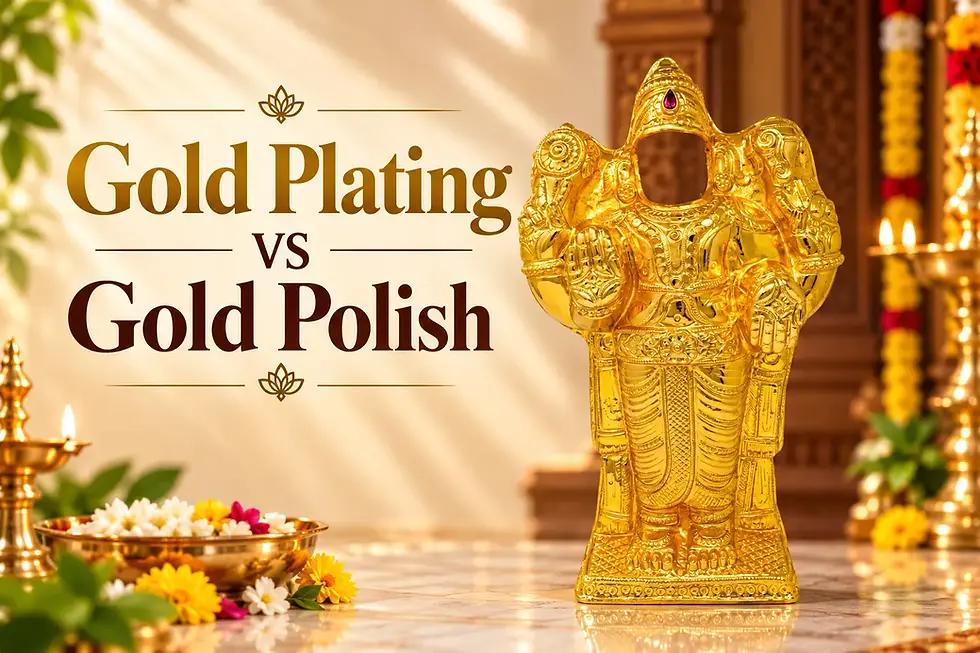
Every pooja room has one idol that has lost its glow. Maybe it is the brass Lakshmi your mother-in-law gifted at your wedding, or the bronze Ganesha that has been in the family for three generations. When you decide to bring back that golden shine, the first question is always the same: should it be gold plating or gold polish?
The two sound alike, but they are very different finishes. This guide explains what each one really is, how they compare, which suits your idol, and how to keep the finish beautiful for years.
Quick Answer
Gold plating deposits a real layer of gold onto the prepared metal. It is the premium, longer-lasting choice.
Gold polish usually means a gold-coloured finish, such as a lacquer or chemical treatment, that gives the golden look at a lower cost and needs more frequent refreshing.
Choose plating for idols you handle daily, want to pass down, or invest in. Choose polish for display pieces, a tighter budget, or a quick refresh before a festival.
What Is Gold Plating?
Gold plating is a finishing process in which a layer of gold is deposited onto a carefully prepared metal surface. Depending on the object and the method chosen, this may be done through electroplating or another suitable plating technique.
Unlike a gold-coloured coating, genuine gold plating involves applying actual gold to the surface. The amount of gold present depends on the process specified, the purity used and the thickness of the layer. This is why two plated idols can look similar on day one but age very differently.
How Gold Plating Works
A professional gold plating service usually follows these stages:
Inspection: The idol's metal, existing finish, condition and fine details are assessed before any work begins.
Cleaning: Dirt, grease, old lacquer and other contaminants are removed using methods suitable for that metal.
Surface preparation: The metal is readied so the plating has a clean, even base to bond to.
Polishing and detailing: Surfaces are refined while delicate ornaments, facial features and raised iconography are protected.
Gold application: The chosen plating process is applied according to the idol's size, detailing and intended use.
Final inspection: Coverage, finish quality and overall appearance are checked before the idol is handed back.
Surface preparation matters most for traditional Hindu god idols. The facial expression, crown, jewellery, weapons and decorative borders are what give a sculpture its character. Poorly controlled preparation or finishing can soften these details, so the quality of the craftsperson matters as much as the gold itself.
What Is Gold Polish?
Unlike gold plating, "gold polish" is not one standardised process. The term can mean different things depending on who is offering it. It may refer to a gold-coloured decorative coating, a lacquer finish, a surface treatment, a polishing service that refreshes an existing finish, or a product designed to create a golden appearance.
Some services sold as gold polish may contain actual gold, while many use non-gold materials or gold-coloured coatings. For a devotional idol, it is worth asking exactly what is being applied before you agree to the work.
What Gold Polish Is Good For
Enhancing the shine of a suitable metal surface
Refreshing the look of decorative objects and display pieces
Creating a golden colour without depositing actual gold
Offering a budget-friendly finish that is easy to redo
Results depend on the materials and the application method. Gold Plating vs Gold Polish Some finishes are more prone to rubbing, discolouration or wear from the environment than others.
Gold Plating vs Gold Polish: Side-by-Side Comparison
Feature | Gold Plating | Gold Polish |
What is used | A layer of real gold deposited by electroplating or a similar process | Gold-coloured lacquer, chemical dye or polishing solution (varies by provider) |
Process | Cleaning, preparation, then controlled gold deposition on the metal | Buffing, chemical treatment or a coating applied to the surface |
Durability | Generally long-lasting; depends on gold thickness, base preparation and care | Generally shorter-lived; may fade or dull sooner with handling or washing |
Pooja and abhishekam use | Handles regular touch; gentle abhishekam is possible with care and provider guidance | Often more sensitive to water, milk, honey, curd and lemon |
Re-finishing | Can be re-plated by a professional | Easily re-polished or re-coated |
Best for | Heirloom and daily-worship idols | Display idols, gifting, short-term refresh |
Exact longevity varies with the provider, layer thickness and how the idol is used, so always ask for finish-specific details in writing.
Which Finish Suits Your Idol?
The right finish depends on the metal, the craftsmanship and how the idol is used.
Brass idols: These oxidise and darken over time, so they need thorough cleaning and preparation before any plating.
Bronze idols: Older or antique bronze pieces need extra care so that fine carving is not softened during preparation.
Panchaloha idols: Made from a traditional five-metal alloy, each piece should be assessed individually because the alloy can affect how a process takes to the surface.
Lakshmi, Ganesha, Murugan, Vishnu, Shiva and other deities: Crowns, ornaments, weapons and facial features must be protected so the iconography stays crisp.
Lamps, kalasams and vahanas: These are built differently and handled often, so they may need a different approach altogether.
Match the Finish to How the Idol Is Used
Your situation | Better fit |
Idol kept behind glass or in a showcase | Gold polish is usually sufficient |
Idol touched and worshipped daily | Gold plating |
Idol bathed regularly during abhishekam | Gold plating, with provider guidance on water and ritual substances |
Festival refresh on a tight budget | Gold polish |
Family heirloom or antique piece | Gold plating after expert assessment |
Return gift or housewarming gift | Gold polish or a ready gold-finish idol |
Factors That Affect Cost
Prices vary from one studio to another, so it helps to know what drives them:
The size and weight of the idol
The amount of detailing, such as jewellery, crowns and carved borders
The condition of the existing finish and the amount of cleaning needed
The thickness and purity of the gold layer requested
Whether old lacquer or damaged areas need repair first
Always ask for a clear written quote that states the process, the finish and what is included.
Questions to Ask Before You Hand Over Your Idol
Is this real gold plating or a gold-coloured coating?
What process will be used, and what is the approximate layer thickness?
How will fine details such as the face and ornaments be protected?
Is the finish safe for water, milk or abhishekam liquids?
What care instructions and re-finishing options do you offer?
How to Maintain a Gold-Plated Idol
A little regular care protects the finish for years:
Dust gently with a clean, soft, dry cloth. Never use a rough or abrasive material.
Avoid harsh chemicals, scrubbers and unapproved metal polishes, which can wear down the gold layer.
Limit prolonged moisture unless your provider has confirmed the finish can handle it.
Handle carefully, especially around crowns, hands and protruding details.
Ask before using water, oils or ritual substances during worship.
Consult a professional if the finish turns uneven, scratched or worn, instead of trying a DIY fix.
Common Mistakes to Avoid
Using lemon, tamarind or household metal cleaners on a plated or lacquered idol
Choosing purely on price without asking what material is actually applied
Skipping proper cleaning and preparation before the finish is applied
Scrubbing hard to "restore shine" on an already thin finish
Plating a heavily damaged idol without repairing it first
FAQs
Is gold plating better than gold polish for a pooja idol?
For idols that are touched and worshipped daily, gold plating is generally the more durable choice. Gold polish can work well for display idols or short-term refreshes.
Is gold polish real gold?
Not necessarily. The term is not standardised, so some products contain actual gold palting while many are gold-coloured coatings. Always ask the provider what is used.
Can I perform abhishekam on a gold-plated idol?
Often yes, with gentle care, but it depends on the finish and the process used. Confirm with your provider before using milk, honey, curd or other ritual substances.
How long does a gold finish last?
It varies with the type of finish, the layer thickness, the base preparation and how the idol is handled. Plating generally lasts longer than lacquer-style polish.
Can a gold-plated idol be re-plated?
Yes. A professional can re-plate an idol when the finish wears out, usually after fresh cleaning and preparation.
How do I clean a gold-plated idol at home?
Wipe gently with a soft, dry cloth. Avoid scrubbers, acids and metal polishes.
Will plating change how my idol looks?
Done well, it enhances the shine while keeping the sculptural detail intact. Poor preparation can soften fine features, which is why choosing a skilled craftsperson matters.
Choosing the Right Finish for Your Idol
The family standing in the pooja room with a faded brass Murugan idol is really asking a bigger question than "polish or plating." They want to bring back something meaningful in a way that lasts, fits their budget and respects the craftsmanship of the original piece.
Choosing between gold plating and gold polish is not only about shine. It comes down to the materials used, the process, the look you want, how much wear the idol will see and the maintenance you are ready to keep up.
Looking to restore the golden appearance of your favourite Murugan, Lakshmi, Ganesha or traditional temple idol?
Connect with Gold Plating Art Studio to discuss suitable gold plating options for your treasured metalwork.


Comments