
Gold Plating for Temples: A Complete Guide


A temple's gold-finished elements do more than catch the light. The kalasam atop the gopuram, the kodimaram, the prabhavali behind the deity and the doors of the sanctum all shape how devotees experience the space. When these surfaces darken, wear or lose their shine, temple committees and donors often consider gold plating to restore them.
Temple work is very different from plating a single idol or lamp at home. The scale is larger, the pieces are more varied, the finish faces sun, rain and daily ritual, and the decision usually involves a committee. This guide covers what can be plated, how the process works, how to plan the project and how to protect the finish afterwards.
What Is Gold Plating?
Gold plating is a finishing process in which a layer of gold is deposited onto a carefully prepared metal surface, commonly through electroplating or a similar technique. The amount of gold, its purity and the thickness of the layer depend on the specification chosen, and these decide how the finish looks and how long it lasts.
It is different from gold polish or gold-coloured lacquer, which create a golden look without necessarily using real gold. For temple work, where the finish is meant to last and carries devotional value, it is important to know exactly which one is being offered.
Temple Items That Are Commonly Gold Plated
What can be plated depends on the base metal, the size of the piece and the process the studio can carry out. Common examples include:
Structures and Fixtures
Gopuram and vimana kalasams, kodimaram (dwajasthambam) fittings, temple doors and door frames, and decorative panels are often considered for gold finishing. These items are exposed to weather, so the specification and protective care matter a great deal.
Deity-Related Items
Prabhavali and thiruvachi arches, utsava murthis, vahanas, kavacham pieces, crowns, pedestals and alankara items are popular choices. They are close to the deity and highly visible, so detail preservation is a priority.
Ritual Vessels and Lamps
Kalasams, panchapatra sets, aarti plates, bells, temple lamps, incense stands and pooja thalis are frequently plated to match the sanctum's look. Items that touch water, milk or oil need clear guidance on the finish and its use.
Gifts and Donations
Donors often present plated lamps, vessels, idols or doors to temples for festivals, vows and family milestones. Agreeing the specification in writing before the work begins helps avoid confusion later.
Metals Commonly Used in Temple Work
Brass: Widely used for temple vessels, lamps and fittings. It oxidises and darkens, so thorough cleaning and preparation are essential.
Copper: Common in kalasams, sheets and structural elements. It is usually suitable for plating with the right preparation.
Bronze: Traditional for idols and utsava murthis. Antique or finely carved bronze needs extra care so the detailing is not softened.
Panchaloha: This five-metal alloy should be assessed piece by piece, since composition can affect how the process takes.
If the metal is unknown, the studio should identify it during inspection before giving a quote.
How Temple Gold Plating Works
Temple projects follow the same core stages as smaller jobs, with more planning around scale and logistics:
Site visit and inspection: The studio assesses each item's metal, condition, existing finish, size and fine details, and whether the work can be done in a workshop or needs to be carried out on site.
Specification and quote: The process, gold purity, layer thickness, finish and scope are agreed in writing.
Cleaning: Dirt, oil, old lacquer, tarnish and residue are removed using methods suited to each metal.
Repair and preparation: Dents, cracks and rough areas are addressed so the surface is even and ready to bond.
Polishing and detailing: Surfaces are refined while delicate features such as faces, ornaments and carved patterns are protected.
Gold plating: The chosen process is applied according to the item's size, shape and exposure.
Final inspection and handover: Coverage, finish quality and appearance are checked, and care instructions are shared.
The cleaning and preparation stages decide much of the final quality. A finish applied over poorly prepared metal can look uneven or wear off sooner.
Planning a Temple Gold Plating Project
Because temple work usually involves several people, planning ahead saves time and avoids disputes.
Get approval first: Check with the temple committee or trustees. For temples under a government authority, such as the Hindu Religious and Charitable Endowments Department in Tamil Nadu, confirm the approvals and procedures that apply before work begins.
List every item: Note the metal, approximate size and condition of each piece so quotes can be compared fairly.
Decide where the work happens: Some items can go to a workshop, while fixed structures may need on-site work. Discuss security, transport and handling of sacred items.
Plan around festivals: Fix the timeline well before major utsavams so there is time for cleaning, plating and any corrections.
Record everything: Photograph items before and after, and keep the written specification, receipts and weights where applicable.
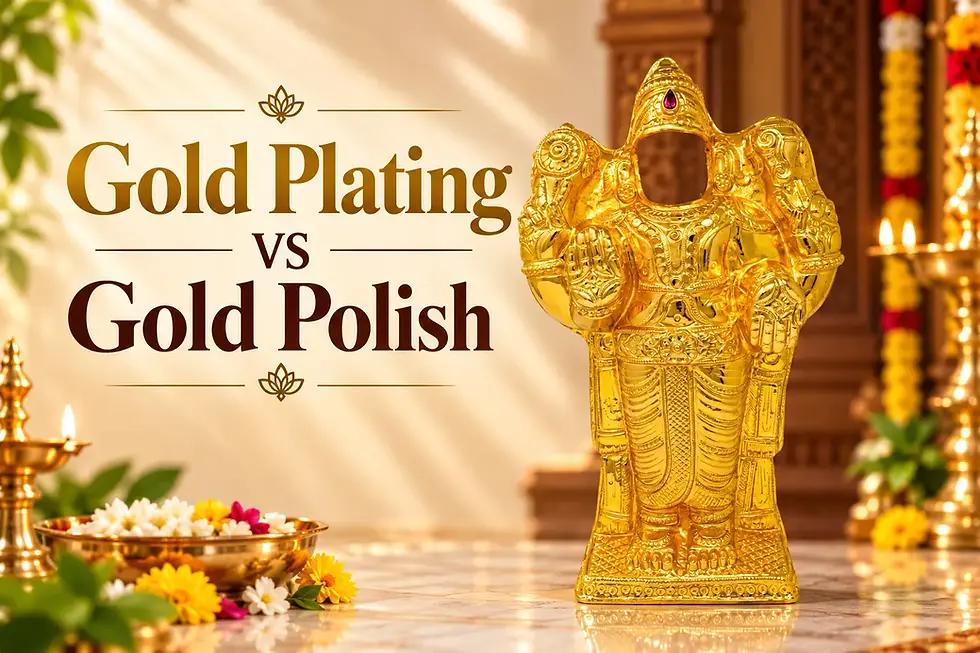
Gold Plating vs Gold Polish for Temples
Item | Exposure | Better fit |
Gopuram or vimana kalasam | Sun, rain and wind | Gold plating, with a specification suited to outdoor exposure |
Kodimaram fittings | Outdoors, frequent handling | Gold plating |
Sanctum doors and frames | Touch and moisture | Gold plating |
Utsava murthi and vahanas | Handling and procession | Gold plating, with careful detail protection |
Daily-use vessels and lamps | Heat, oil and water | Gold plating, after discussing safe use |
Decorative or display pieces | Low | Gold polish may be enough |
Plating is generally the better choice for items that are touched, exposed to weather or used daily, while polish can work for low-wear decorative pieces. Ask the studio to confirm the finish for each item.
What Affects the Cost?
Prices vary, so compare what is included rather than only the final figure:
The size, surface area and weight of each item
The thickness and purity of the gold layer
The amount of detailing and carving
The condition of the item and the cleaning or repair needed
Whether work is done in a workshop or on site
The number of pieces and the project timeline
Gold plating is a premium finish, so a very low quote deserves questions. Ask for a written, itemised quote that states the process and finish.
How to Maintain a Gold-Plated Temple Finish
Dust gently with a soft, dry cloth. Avoid rough fabric and scrubbers.
Avoid lemon, tamarind, ash and household metal polishes, which can wear down plated surfaces.
Wipe lamps after use to clear oil and soot, and let them cool before touching.
Limit prolonged contact with water, milk, honey, curd and other ritual substances unless the studio has confirmed the finish can handle it.
Protect outdoor items with regular inspection, especially after heavy rain or strong sun.
Handle carefully during processions and festivals, particularly crowns, hands and protruding details.
Consult a professional if the finish turns uneven or worn, instead of trying a DIY fix.
Common Mistakes to Avoid
Choosing a studio only on price without asking what is applied
Starting work without committee approval or a written specification
Skipping inspection and repair on damaged or antique pieces
Using household cleaners on freshly plated items
Assuming every plated item is safe for abhishekam or food use
Leaving the schedule too close to a festival
Visit Gold Plating Art Studio in Chennai
The best way to know what your pooja items need is to show them in person. Gold Plating Art Studio welcomes you at our Ambattur branch in Chennai, so you can choose whichever is closer to home.
Bring your lamp, kalasam, vessel or idol along. Our team will look at the metal, the existing finish, the condition and the fine detailing, and guide you on the finish that suits how you use the piece.
For daily-use items: Discuss how often the piece is handled, lit or used in abhishekam, so the right finish can be recommended.
For heirloom and antique idols: Show the piece in person so the carving and detailing can be assessed before any work begins.
For festival plans: Visit early and share your date, so the work can be planned without a last-minute rush.
Visit our T. Nagar store or Ambattur branch to discuss gold plating for your pooja items and get clear guidance on your next step.
Frequently Asked Questions
Can temple items be gold plated?
Most metal temple items can be considered, including kalasams, vessels, lamps, prabhavali and vahanas. Each piece should be inspected first, since the base metal and condition decide suitability.
Can a temple kalasam or gopuram top be gold plated?
Yes, this is a common request. Because these items face sun and rain, discuss the specification and expected maintenance with the studio.
Is gold plating suitable for utsava murthis?
Often yes, but fine detailing must be preserved. Choose a studio that explains how faces, ornaments and carvings will be protected.
Can a plated item be re-plated later?
Yes. When the finish wears out, a professional can clean and re-plate it.
How long does temple gold plating last?
It varies with layer thickness, base preparation, weather exposure, usage and care. Items that are handled or exposed often will need more attention than protected ones.
Do temples need approval before plating?
Temple committees or trustees usually decide, and temples under a government authority may have additional procedures. Check the requirements that apply to your temple before starting.
Choosing the Right Partner for Your Temple
Gold plating a temple is a long-term commitment. It carries the devotion of donors, the trust of the committee and the experience of every devotee who walks in. The best results come from clear planning, a written specification, careful preparation and a studio that explains what it will do before it begins.
Planning gold plating for temple kalasams, lamps, vessels, doors or idols? Speak to a professional gold plating studio in Chennai, share the list of items and how each is used, and ask for a clear, itemised quote with care guidance.
Shop Details:
21K,7th Street,3rd Main Road, North Phase Sidco Industrial Estate, Ambattur, Chennai 600098, Tamil Nadu


Comments